

















 Summary
 Presentation of Joseph Országh
 Curriculum vitaeAbout my Scientific Works Ecological Water Consumption Practices
The text within this page was first published on www.eautarcie.com: in 2003
The original text has been adapted and translated by André Leguerrier. First published on this page at www.eautarcie.org : 2010-10-25
Last update: 2016-02-21


CURRICULUM VITAE

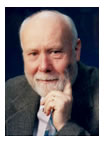 József ORSZÁGH
Born in Budapest, March 21st 1937. Married, with 3 children.
1955 : Industrial engineer in electromechanics
1955-56 : Studies at Budapest Polytechnic, interrupted by the Hungarian Revolution of 1956. Combat participant against Soviets.
1957 : Arrival in Belgium, political refugee status obtained. Naturalized as Belgian citizen in 1969.
1961 : Graduated in Chemical Sciences at the Université Libre de Bruxelles (ULB).
1969 : Doctorate obtained in Chemical Sciences at the ULB.
1969-71 : Assistant to Professor Vander Poorten (electrochemistry) at Mons’ Faculté Polytechnique.
1971 : Assistant to Professor P. Fierens (materials science) at Mons’ Université de l'État.
1971-82 : Loaned to the Université Nationale du Zaïre on long-term mission in the context of cooperation between universities. Professor at Lubumbashi’s Polytechnic Faculty (Zaire), Vice-Dean of this faculty.
1975 : Appointed Chief Academic at the Université de Mons-Hainaut (UMH) with Professor P. Fierens (general chemistry and materials science).
1982 : Reinstated as Chief Academic at UMH.
1983 : Construction of a 5 kVA photovoltaic plant in Zaïre.
1983-86 : ACCT expert on renewable energies. Missions in Zaïre and Burundi.
1983-88 : Implementation of a rural development plan in Zaire.
1982-86 : Visiting Professor at Lubumbashi’s Polytechnic Faculty.
1989 : Appointed a member of the Walloon Region Water Advisory Committee, representing Belgium's « Friends of the Earth - International ». Served until 2003.
1993-97 : Member of the Bureau de la Commission des Eaux (Office of Water Commission).
1987 : Attached to Professor J-J. Tondeur’s Applied Physical Chemistry Department.
2000 : Independent researcher attached to UMH’s Chemical Institute.
2002 : Retired.
Research Areas
Fundamental Aspects:
Liquid thermodynamics, kinetic studies of chemical reactions in solution reactions under high pressure, diffusion in solids, UV-visible spectroscopy, electrochemical studies of aqueous solutions (incomplete redox systems), diffusion phenomena and electron transfer reactions in aqueous medium.
Applied Aspects:
Development of new building materials, detection of fraudulent treatment of milk, copper hydrometallurgy research, analysis of agricultural ecosystems, study of natural cycles relative to water, groundwater protection problems, sanitation, investigation of physicochemical factors on water potability and biocompatibility, control of pollution from livestock manure, remediating industrial sites.
Main Results
N.B. Throughout our carreer, we have purposed to find, rather than simply seek out, results and solutions to scientific problems having direct or indirect bearings on practical problems.
Hereafter, we only mention those results that we feel are important to highlight the main stages of our scientific career.
In some instances, these results are the fruit of collaboration with other researchers.
Fundamental Aspects:
- Proposal of a practical state equation for normal liquids, based on the cage model with potential function developed by Lennard-Jones and Devonshire. It’s an isothermal equation that is experimentally well verified in the case of real liquids, equivalent to that of Boyle-Mariotte for gases. Because of its simplicity, this equation would have its place in the curricula of basic science. With this equation, starting from a few simple quantities (coefficient of thermal expansion, of compressibility) measured at atmospheric pressure, we can calculate all thermodynamic functions of liquids under high pressures.
- Proposal of a unit mathematical formalism to address both proton and electron transfer reactions in an aqueous solution. Study of the electronic activity in aqueous solutions to characterize their redox properties. Equivalent theory to that of pH (proton activity) in aqueous solutions. Through this novel approach, we can undertake the study of incomplete redox systems (solutions containing only the reduced or oxidized form of a redox couple) and assess the true responsiveness of redox systems. This simple and fundamental theory has its place in the basic treaties on general chemistry, and even in the chemistry program of secondary education. The theory of the electronic activity of aqueous solutions, which introduces the concept of redox indifference next to that of acid-base neutrality, has interesting applications in fields as diverse as the study of the biocompatibility of drinking water, hydrometallurgy by bacterial action, sewage treatment, etc.
Applied Aspects:
- Development of a geo-concrete construction material that does not require high temperature heating in its fabrication process (energy savings).
- Proposal of bioelectronic criteria for biocompatibility of drinking water. Whole-house rainwater harvesting system, including food and drink.
- Development of the EAUTARCIE system, water autarky for the home, supplied exclusively with rainwater without discharge of any pollution in natural waters, without the need for sewers and sanitation plants. The development of two commercial systems: PLUVALOR, or whole-house rainwater reuse and TRAISELECT, or the selective treatment of domestic wastewater. This led to the founding of two small Walloon businesses. Since then, these businesses have ceased operations, and the PLUVALOR and TRAISELECT systems are no longer commercialized.
- Proposal of a recycling method for human waste normally produced as domestic sewage. Simple and inexpensive technical solution. Development of a 3rd generation dry toilet – the biolitter toilet or BLT – which works on the principle that carbonaceous plant cellulose is used to inhibit the actions of urease and other enzymes in human excrement.
- Interactions between biomass management, water management and climate in an ecosystem (study in progress).
- Composting method to remediate soils that are polluted with heavy metals. Method that is used to control livestock manure pollution as well as rehabilitate gravely polluted industrial brownlands. Heavy metals are rendered biologically unavailable.
- Establishment of the concept of integrated «ecological» sanitation, a scientific and technical approach that fundamentally challenges the traditional concept of sanitation: instead of focusing on the best purification efficiency, it focuses on the least environmental impact by introducing the notion of environmental performance, by means of a full environmental life-cycle assessment.
Major Publications
Below, we only mention those publications of interest that may go beyond the field of top specialists. Throughout our career, we have prioritized the resolution of concrete practical problems rather than producing a large number of publications that would interest few specialists. The list of forty of our publications in international journals is available.
- J. ORSZÁGH, Ph. LAMBILIOTTE, Sur l'équation d'état de Tait-Tammann pour les liquides. Établissement de l'équation d'état des liquides normaux (On theTamman-Tait equation of state for liquids: establishment of the equation of state of normal liquids) .
L'actualité chimique (December 1980), pp.28-32.
- J. ORSZÁGH, P. FIERENS, Fabrication de matériaux de construction à partir de matières premières zaïroises peu onéreuses (Making construction materials using low-cost raw materials in Zaire).
Appropriate Building Materials for low cost Housing: African Region. Proceedings of a Symposium Held in Nairobi, Kenya, from November 7 to 14, 1983, Vol. 1 & 2. E.& F.N. Spon, London (1985).
- J. ORSZÁGH, Réactions d'oxydo-réduction et acido-basiques. Vers une approche théorique et expérimentale plus cohérente (Redox and acid-base reactions: Towards a more coherent theoretical and experimental approach).
Sciences du Vivant. Éditions Arys, Paris, N°1 (1990), pp.23-34.
- J. ORSZÁGH, L'eau en tant que système rédox (Water as a redox system).
Sciences du Vivant. Éditions Arys, Paris, N°2 (1991), pp.81-97.
- J. OSZÁGH, Quelques aspects physico-chimiques des coordonnées bio-électroniques (Some physicochemical aspects of Bio-electronic coordinates).
Sciences du Vivant. Éditions Arys, Paris, N°4 (1992), pp.45-62.
- J. ORSZÁGH, Concepts de base de la bio-électronique (Fundamentals of Bio-electronics).
Sciences du Vivant. Éditions Arys, Paris, N°5 (1993), pp.77-87.
- J. ORSZÁGH, Ph. LAMIBILIOTTE, K. NANIZEYI, J-J. TONDEUR, The Concept of Normal liquids in Chemical Education.
13th European Conference on Thermophysical Properties, August 30 to September 3 (1993), Lisbon.
- J. ORSZÁGH, La pluie, eau pure des nuages (Rain, pure water from the clouds).
La Vie Naturelle. Éditions Arys, Paris, N°80 (February 1993), pp.50-56.
- J. ORSZÁGH, Approche systémique du problème de traitement sélectif des eaux usées domestiques (Systemic approach to the selective treatment of domestic greywater)
Tribune de l'Eau. CEBEDEAU, Vol. 45, N°6 (1992), pp.89-94)
- J. ORSZÁGH, Le traitement sélectif des eaux usées et le cycle de l'azote (The selective treatment of greywater and the nitrogen cycle).
Nouvelles de la Science et des Techniques, Bruxelles, Vol. 13, N°1 (1995), pp.271- 274.
- J. ORSZÁGH, La bio-électronique et l'eau alimentaire (Bio-electronics and drinking water).
1st International Symposium on the bio-compatibility of water, beverages and food, Niederbronn-les-Bains, Alsace (March 23-24 1995).
- J. ORSZÁGH, The Integration of Water Policy and Other Policy Areas.
European Commission Conference on Community Water Policy, Brussels (May 28-29, 1996).
- J. ORSZÁGH, Utiliser une toilette sèche: une question de cohérence (Using dry toilets: a question of coherence).
Humus News. Vol. 13. N°2 (1997), pp.4-8.
- J. ORSZÁGH, Une eau potable ou biocompatible (Biocompatible drinking water).
La Vie Naturelle. Éditions Arys, Paris, N°139 (June 1998), pp.83-88.
- J. ORSZÁGH, Eau: La pollution de nos W.-C. (Water: pollution from our flush toilets).
Silence. N°242 (March 1999), pp. 4-11.
- J. ORSZÁGH, Urban Water Management Technology with respect to Protecting the Agriculture Ecosystems (in Chinese).
Water Resources and Hydropower Engineering. Vol. 31, N°7 (July 2000), pp.58-60.
- J. ORSZÁGH, P. LOR, Assainissement intégré: une nouvelle vision de la gestion des eaux usées domestiques (Integrated sanitation : a new vision to domestic wastewater management).
Proceedings of the « Journées Information Eau (JIE) », Poitiers. Conference N°49, Vol. 2 (September 13-15, 2000).
- J. ORSZÁGH, L'autonomie en eau dans la maison, sans pollution est désormais possible (Water autarky for the home, without pollution, is now possible).
La Vie Naturelle. Éditions Arys, Paris, N° 168 (February 2001), pp.72-78.
- J. ORSZÁGH, Pour une gestion durable de l'eau dans le monde (Towards sustainable water management in the world).
Science Frontières (www.sciencefrontieres.com). N°63 (May 2001), pp.24-25.
Also refer to the more recent publications on this website: http://www.eautarcie.org/09d.html#en.