


















 Why Use Dry Toilets ?
 Challenges to the Expansion of Dry Toilets Dry Toilets and their MisconceptionsDry Toilets in City Apartments?The Fundamental Rule of Ecosystems
 Our Relation to our Dejecta
 The Holy ShitThree Generations of Dry Toilets The BLT Instruction Manual
Chemical Composition of Human Dejecta
Composting Human Dejecta
BLTs on the Market
The Holy ShitThree Generations of Dry Toilets The BLT Instruction Manual
Chemical Composition of Human Dejecta
Composting Human Dejecta
BLTs on the Market
To find out how to build your BioLitter toilet, click here, or download the pdf schematic. [Drawings adapted by Olivier Vienne, from Écaussine in Belgium]
To see examples of EAUTARCIE homes that are self-sufficient and self-contained in terms of water consumption, click here.
It is interesting to read a testimonial from Andalusia (Spain) on EAUTARCIE’s benefits in dry regions.
The text within this page was first published in French on www.eautarcie.com: in 2003
The original text has been adapted and translated in English by André Leguerrier and was first posted on www.eautarcie.org: 2009-06-15
Last update: 2017-08-16



Why Use Dry Toilets?

Challenges to the Expansion of Dry Toilets
Preamble
The use of dry toilets is presently considered by many environmentalists as the only acceptable alternative solution towards attaining sustainable sanitation. In so doing, flush toilet users are being finger-pointed for their « environmental irresponsibility ». However, we feel that the true place of dry toilets must be contextualised with respect to real environmental concerns.
Without wanting to belittle dry toilets, one must admit that their generalized use in modern society is impossible. The implementation of dry toilets in big cities is unrealistic. Also, one cannot disregard the fact that the vast majority of people will not accept dry toilets, even where they are technically feasible (e.g. in single homes with a garden). A growing part of humanity lives and will live in big cities in high-density housing. Fortunately, we now know the way towards the urban application of the dry toilet principle: not by the use of individual household dry toilets, but by the application of the BioLitter dry toilet principle on a collective scale, using « eco-friendly » flush toilets, i.e. that would not be connected to a conventional sanitation system.
The advantage of this option is to provide users with a choice, between using flush toilets or dry toilets, taking into account their built environment and specific concerns.
Proponents of dry toilets currently justify the use of dry toilets to resolve two key issues: the pollution generated by conventional flush toilets and the wastage of potable water when flushing the tank. This perspective induces a misconception on the management of our wastewater. The most important aspect of wastewater management is to recognize that our dejecta are a resource and not waste – which can also be recycled in cities by the use of flush toilets. The headlong and unconditional push for dry toilets is ill-advised.
Some NGOs working in developing countries argue for the implementation of flush toilets by presenting these as « guardian angels for health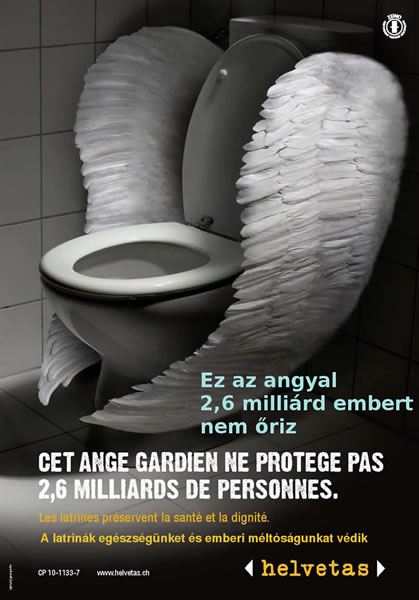 ». At the same time, they designate latrines as the only other alternative.
A few years ago, we were tempted to condemn the flush toilet, asserting that « the problem arises when our dejecta are discharged into water ». We now know that low-flow toilets provide the necessary amount of water for the proper treatment of human dejecta in centralized composting facilities [1]. (Of course, the water for this purpose must not be drinking water.) Whether we like it or not, the flush toilet is now part of our daily life. Its convenience constitutes and advance in comfort that it would be unreasonable (and impractical) to abandon. It is no less true that in single family homes, proper (litter-based) dry toilets remain an alternative solution offering a similar convenience to flush toilets. When rural and suburban homeowners are provided with the choice between the flush toilet and a proper dry toilet, society will discover that the dry toilet is the most rational, most eco-friendly and least expensive solution, especially when you come to realize that the dry toilet provides homeowners with valuable compost as soil amendment to fertilize the garden, not to mention a reduction of 20 to 30% in the water bill. (Remark: in the option mentioned above, the use of « eco-friendly » flush toilets involves the individual cost for periodically emptying the household septic tank and a collective cost for treating the septic tank sludge at a centralised composting centre.)
In the wastewater impregnation and composting centre located in Moréac (France), domestic wastewater that enters the system is combined wastewater: black water as well as greywater. The black water is therefore diluted, but thanks to this dilution, the composting centre can use greater quantities of plant-based material than what could be used with black water only. Yet in Moréac, this situation generates too much water, fortunately compensated by an extensive evaporation in the saturation basins where the temperature can reach up to 70°C, emitting at times visible clouds of steam. There would be insufficient water if the wastewater entering the system was strictly black water. Our observations have led us to conclude that the use of low-flow toilets would provide just the right amount of water for the composting process to work in centralized composting facilities.
Now concerning NGO recommendations for poor developing countries, recommendations to implement collective latrines, highly polluting, only displaces the pollution problem without resolving it. Litter-based dry toilets such as Eautarcie’s BioLitter toilet or Joseph Jenkins’ Humanure toilet are the optimal solution in all respects: sanitary, societal, economical and environmental (and lest we not forget their simplicity).
Obstacles to dry toilets occur on three levels:
- The predominance of the hygienist ideology which decrees that our dejecta constitute public health’s enemy n°1. This vision has generated the current science of sanitary engineering, which constitutes a major environmental nuisance.
- The second level derives from the first: the refusal of the majority to use dry toilets. This is an irrational attitude that originates in our education system.
- This brings us to the third level: disinformation instilled by powerful lobbies – pharmaceutical and medical as well as those linked to sanitation and water supply industries.
Yet alternative solutions are clearly less expensive and more efficient. [2]
But there is another problem. The diverse commercially available dry toilets have varying costs and have very differing environmental impacts. Their convenience for users and their cost are only limited aspects to be accounted for. When purchasing a dry toilet, you have to consider all aspects. For this, full disclosure of information devoid of any commercial interest is essential. Providing such information is the purpose of the Eautarcie website. Commercial dry toilets are convenient, but too expensive. Moreover, their eco-rating is dubious, to say the least.
Take the case of a family living in a rural home with garden, with its own on-site sewage treatment system. To implement the new system, this family will have little to no cost. By adopting a proper dry toilet, greywater will be evacuated from the home via the existing drainage network. In summer, greywater will be used to irrigate the garden – without any prior treatment. In winter, greywater, after passing through the septic tank, will be discharged either into a soakaway or a dispersal drain (or into an existing leachfield). One can also consider photo-purification.
Dry Toilets and their Misconceptions
The first misconception is the idea of separating urine from faeces
A Danish dry toilet designer who came to Brussels to give a conference asserted that « animals in nature do not necessarily defecate and urinate at the same time ». It would therefore be « natural » to separate both effluents. Such an assertion lacks scientific backing.
It would be more honest to say that we separate the effluent for reasons of technical convenience: to space out the required manipulation of toilet effluent by the user. Urine, which is easy to store in a separate container, represents 90% of our excreta's mass. Dried faeces take up little room. Once urine is evacuated from a toilet by simple draining, removal of the little solid matter remaining can wait a few months. Thanks to this trick, dry toilet use resembles that of a flush toilet. The occasional user practically sees no difference.
Storing urine separately automatically brings about the emergence of odours. As we shall see about the the BioLitter toilet, or BLT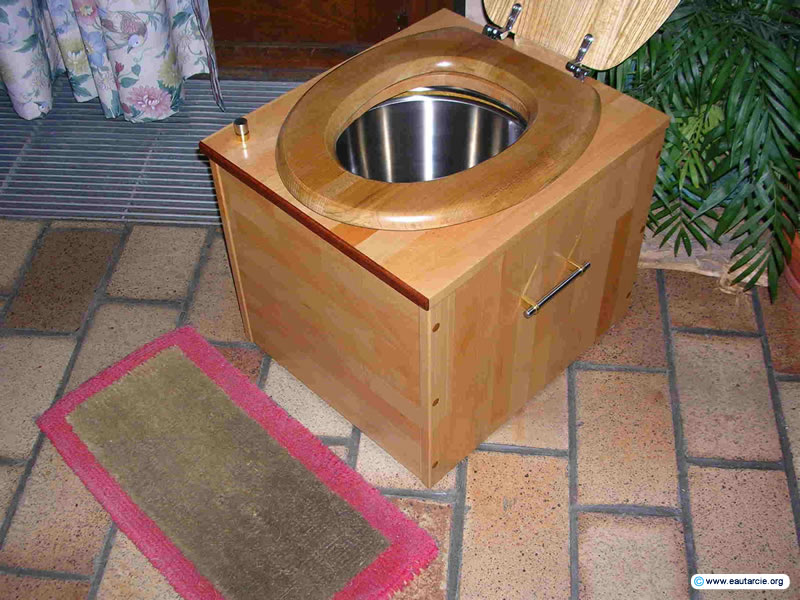 , the key to odour control is directly linked to the mixing of urine, faeces and cellulose-containing litter
 . When you separate the two effluents, odours appear on both sides. To get rid of these, you need a forced ventilation system with piping, etc.
The second misconception is to mistake dried faeces for humus
Most commercially available dry toilets work on the same source-separating principle [3]. When you go through colourful catalogues of these, you will notice how discrete they are about where the urine goes in the process. But what is most disturbing is when dried faeces are falsely presented as « compost ». Spreading dried faeces in the garden is practically equivalent to defecating in it.
Dry toilets in which urine and faeces are not separated are better, but that is not enough. Even the addition of litter in the process must respect specific parameters. To design a proper dry toilet, you must understand soil formation processes. Dry toilet designers and salesmen don't have the exclusive « privilege » of misunderstanding the nature of humus. In discussions with sanitation engineering technicians, one will be amazed at the scope of their ignorance in pedology (study of soils), the knowledge of which is capital to the understanding of the environmental impacts of dry toilets and wastewater treatment.
The third misconception is to believe that stored urine can be harmlessly used in the garden
Urine is collected in a tank where, due to ever-present enzymes [4], organic nitrogen is transformed into ammonium ions. This explains urine's ammonia (NH3) smell after a few hours in a chamber pot. About 80 % of our excreta's organic nitrogen is contained in urine, it's easy to understand its potential impact on a receiving milieu.
In fact, in the form of ammonia, nitrogen can only oxidise when it ends up in nature. Thus are formed toxic nitrous ions (NO2-), which oxidise into nitrates (NO3-). Stored urine becomes an ammonium nitrate concentrate that also contains nitrite ions. Ammonium nitrate is a common chemical fertilizer, which explains the « fertilizing power » of urine. What one tends to forget is that ionic compounds of this kind speed up the decomposition of humus, thereby destroying the soil’s humus.
Dry toilet manufacturers recommend using stored urine, diluted 8 times (or more), for plant irrigation. The resulting liquid is of concern for the soil: the problem lies in how ammonia that will has developed in the diluted liquid oxidises and percolates into the soil. In the form of ammonia, nitrogen will infiltrate much easier and quicker [5] into the water table than if it was in nitrous form: that is a most insidious pollution. To assert that stored and diluted urine can harmlessly be used in the garden can only be explained by a total ignorance of the processes that take place in stored urine as well as those that partake in the soil (see the article « Blessed Urine – Fertile Cradle »).
To summarize, spreading human urine in the garden resembles that of spreading liquid pig manure on farmland. The same can be said of dried faeces used in the garden. Normally, spreading urine is subject to the same regulations as that of industrially produced liquid manure. The quantity of nitrogen (N) spread as liquid manure cannot exceed 200 kg per year per hectare. Thus, when spreading urine and faeces, one person's annual 5 kg nitrogen production, requires a garden of at least 250 m² per person. Below this value, European standards would be exceeded.
The fourth misconception is to believe that the main advantage of dry toilets is water conservation
One can understand that water savings are less important when you have to dilute urine 8 times or more with water for its reuse in the garden, considering humans produce 12 litres of urine per day per person.
The fifth misconception is to believe that the main purpose of a dry toilets is to avoid water pollution
Although dry toilets certainly contribute to a reduction in water pollution, remember that urine spread in the garden pollutes our underground water reserves more than does conventional sewage treatment. In a similar sense, another misconception would be the belief that a proper sewage treatment repairs the damage done by conventional flush toilets. This is the most serious mistake. This includes phytopurification: persons with good intentions and who are motivated to protect the environment are deceived into believing in purification systems using plants. We must insist that there is no good method of purifying black water. A tragic and irreversible waste is committed the moment black water and greywater are combined prior to treatment [6].
This assertion is particularly true of intensive pig raising over slatted floors. The nuisance (smell and nitrate pollution) generated by spreading liquid pig manure on farmland is due to the transformation of the manure's organic nitrogen into ammonia during initial storage. This is the same phenomenon that occurs in most dry toilets, when storing urine in a separate tank.
Dry Toilets in City Apartments?
As previously mentioned, using dry toilets in big cities, especially city apartments, is unrealistic. A growing proportion of city housing is comprised of apartment buildings that contain 6, 10, 100, 300 apartments or more, spread out on 3, 4, 10, 20 storeys or more. Most of these homes are not serviced by gardens where one can compost and grow food. So for all intents and purposes, litter-based dry toilets will be of no interest for those who live in apartments.
And even for those apartments having access to a garden, the transport of litter or dry toilet effluent from apartment to garden, and vice versa, would require going through stairs or elevators, with all the potential complications this can involve. It is best to reserve the use of dry toilets for those homes that have easy access to a garden, where one can perform composting and gardening activities.
The Fundamental Rule of Ecosystems
The reader can rightly wonder what to do if flush toilets serviced by conventional sanitation plants and commercial dry toilets currently available on the market are equally environmentally harmful.
To answer this question, we must:
- revisit our relation to our dejecta;
- understand the basic rules that govern how all ecosystems work;
- focus on techniques that integrate these new parameters.
To start, we must consider a fundamental rule
| Fundamental Rule |
Each kilogram of plant and animal biomass that is not returned to the earth, jointly and simultaneously, to renew the process of soil formation, weakens the ecosystem's production capacity and becomes a pollution threat to water and air. As a result, the great natural cycles that are nitrogen, phosphorus, carbon and water will always be disrupted. |
What is « plant or animal biomass »?
| Plant Biomass | Animal Biomass |
| Wood, dead leaves, straw, stems, leaf stalks, grape stalks, waste paper etc. | Corpses and animal carcasses, human and animal dejecta. |
| Rich in carbon, poor in nitrogen. | Rich in nitrogen, poor in carbon. |
| High carbon/nitrogen ratio (C/N): up to 300. | Low carbon/nitrogen ratio (C/N): around 7. |
If these two types of biomass are not combined simultaneously in the process of soil formation, there cannot be sustainable water management, nor sustainable food production practices.
Conversely: if we harness all available biomass and return it to the earth to renew the process of soil formation, global water and food shortages would be resolved within two generations, without massive capitalization. This is also the key to curbing climate change.
When examining the prime cause for worldwide water shortages, we discover fundamental wrong decisions relative to biomass management. Under pretext of « energy valorization » or « wastewater purification », the ongoing massive destruction of biomass is progressively unbalancing the biosphere towards a point of rupture. Even a substantial part of the greenhouse effect is due to incorrect biomass management.
Human faecal biomass is far from a « negligible quantity ». The nitrogen contained in humanity's dejecta represents an equivalent mass of 40% of worldwide agricultural nitrogen use (data published in 2000; currently, the percentage is higher). In the animal world (excluding aquatic and marine life), human biomass is in third place, after cattle and insects, but before pigs. When considering sustainable management of the biosphere, the massive destruction of human dejecta that occurs under pretext of wastewater purification is a kind of collective suicide. In this sense, the actual principle of black water treatment, whatever the system used, is incompatible with the concept of sustainable development [7].
You can better understand this notion when reading the paragraph on the importance of humus.
To comply with the above fundamental rule, it is necessary to find a technical solution that will renew and perpetuate the humus formation cycle by returning our dejecta to the biosphere, jointly and concurrently with plant biomass. The BioLitter toilet (BLT) is one of the possible solutions to this requirement.
One of the first flush toilets (water-closet or WC) was built in England at the end of the 18th century by a plumber, Thomas Capper. Initially, it was a set-up reserved for the rich. Its environmental impact was therefore limited. Those who were subjugated by hygienist ideas viewed the WC as the ultimate solution to urban sanitation problems. They could not foresee the environmental disaster provoked by its generalized use. We now know of credible alternative solutions that would solve household sanitation problems without our rivers becoming open-air sewers. The conventional flush toilet must therefore be considered as an accident in human history, an error that there is still time to correct. What is most bothersome is that many sanitation engineers persist in their hygienist mentality, with 19th century techniques.
To resume, what must we revise in our relationship with our own excreta? We must admit once and for all that human dejecta are not wastes to be eliminated, but are an integral part of the ecosystem that makes us thrive. Our food comes from the earth, and our dejecta must return to the earth, but through a process that we had better understand to avoid committing mistakes beyond repair.
To continue reading on this subject, go to chapter on Our relation to our dejecta.