


















 Why Use Dry Toilets ?
 Our Relation to our Dejecta
 The Holy Shit
 Three Generations of Dry Toilets
  The Biolitter Toilet or BLTWho Uses the BLT?The BLT Operating PrincipleWhat the BLT Looks LikePlastic or Metal ReceptacleImportant: A BLT Must Be Beautiful!How to Build your BLTBLTs for Collective UseThe BLT Instruction Manual
Chemical Composition of Human Dejecta
Composting Human Dejecta
BLTs on the Market
The Biolitter Toilet or BLTWho Uses the BLT?The BLT Operating PrincipleWhat the BLT Looks LikePlastic or Metal ReceptacleImportant: A BLT Must Be Beautiful!How to Build your BLTBLTs for Collective UseThe BLT Instruction Manual
Chemical Composition of Human Dejecta
Composting Human Dejecta
BLTs on the Market
To find out how to build your BioLitter Toilet, click here, or download the pdf schematic. [Drawings adapted by Olivier Vienne, from Écaussine in Belgium]
The text within this page was first published in French on www.eautarcie.com: in 2003
The original text has been adapted and translated in English by André Leguerrier and was first posted on www.eautarcie.org: 2009-06-15
Last update: 2017-08-16



Three Generations of Dry Toilets

Three Generations of Dry Toilets
First generation dry toilets
First-generation toilets were the latrines or backhouses of our grandparents: a simple hole or pit in the ground, above which there was a floor or board with a hole, with or without a proper seat. These toilets were smelly and very polluting due to anaerobic fermentation (absence of air). Agricultural reuse of the effluent did not however seem to present sanitary problems. Latrines were a common practice for centuries, indeed millennia.
In fact, wastewater management using latrines was less environmentally harmful than today’s modern sanitation techniques as imposed by law. On the pages on the failings of sanitary engineering, we have already shown that the better sanitation plants perform, the more they pollute and destroy the environment. Latrines are also sources of pollution, but they present one advantage: today’s sanitation destroys a precious resource for agriculture, unlike latrines, the contents of which are traditionally recycled in agriculture.
Nevertheless, that does not mean we must go back to latrines, even in developing countries, as recommended by some NGOs.
Second generation dry toilets
Second-generation toilets developed in the 20th century are mainly characterized by two types of toilets: source-separating Scandinavian-type toilets and composting toilets. A key objective of these toilets was to improve comfort and convenience with respect to latrines. In fact, they constitute a technical improvement on traditional latrines in order to make the use of toilets possible within the home.
In source-separating toilets, urine is first separated from the faeces, mainly to space out the required emptying of the waste: this is the toilet's most important characteristic. Urine, which represents about 90 % of the excreta, is diverted to a separate storage tank while the faeces are collected in a main compartment. To reduce their volume, these are usually dried out with a heating element, a hot air current or solar energy. A forced air ventilation system is usually provided to control odours that ultimately appear after waste separation. The ventilation system almost always works electrically. The dried faeces and the urine are then commonly used in the garden and/or for agricultural use. To avoid burning plants, urine must first be diluted to 8 times its volume.
In composting toilets (with or without source separation), « internal composting » - usually within a container or pit under the toilet – is always inspired by the desire to avoid having to handle our excreta, i.e. the least possible. However, it is impossible to provide the necessary aerobic conditions for good composting in a container or pit. True composting must be done directly on the ground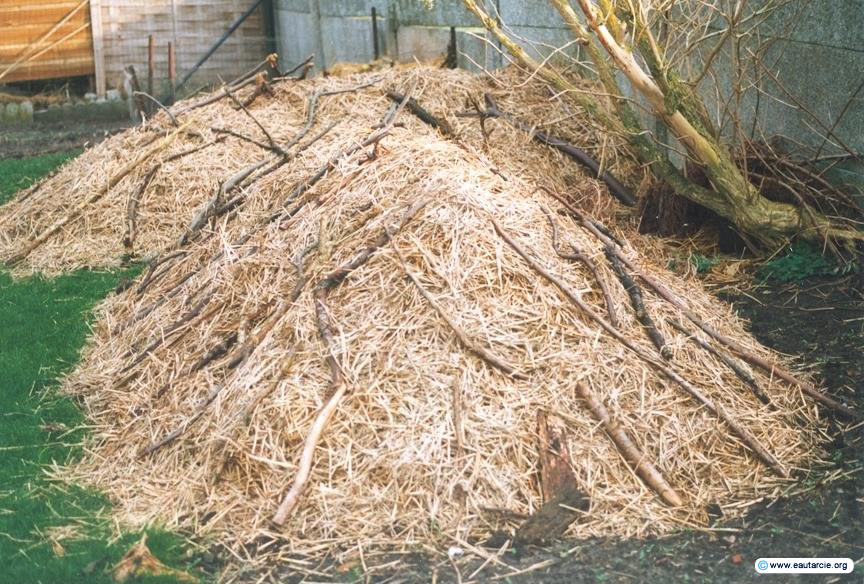 , in symbiosis with soil's fauna. Anaerobic fermentation is inevitable in containers. It removes nitrogen and a good part of the carbon from the humus forming process, and it generates nitrate and ammonium pollution. Regrettably, there is a high price to pay in financial, technical and environmental terms for such intellectual comfort.
Third generation dry toilets
Third-generation toilets differ from the others, on the way they work, biologically. Smell is inhibited thanks to the addition of a litter composed of plant matter that is rich in cellulosic carbon. This is the basis of the BioLitter toilet or BLT (as well as Joseph Jenkins’ Humanure toilet). In this toilet, plant cellulose biologically inhibits the enzymatic reactions in the excreta that are responsible for the odours. This can only work in the presence of urine. To prevent anaerobic fermentation (with the consequent odours), the toilet's « receiving » capacity cannot be expected to exceed the volume of one week's « production ». Therefore, the emptying of the container is more frequent. Note that a BLT, even though it is placed within the home, does not require special mechanical ventilation. It simply takes the place of the flush toilet. Before reuse for agricultural or gardening purposes, the BLT's effluent is composted, either directly on the ground surface or in a heap. The heap technique involves a two-stage process, over a period of 2 years or more. The compost thus obtained is suitable for all plants, without any sanitary risk.
The next step
The next step is simply the transposition of the BLT operating principle to situations where dry toilets are not an option, for example in cities. When black water and greywater are collected separately, the selective treatment of black water (from flush toilets and urinals) becomes possible. The advent of biomass composting centres will ensure that urban populations will use the equivalent of a large-scale BLT located outside of the city.
On this subject, see our video on SAINECO, or EAUTARCIE’s version of ECOSAN.
The BioLitter Toilet or BLT
Naming the toilet
For years, Joseph Országh was annoyed to observe that people reduced his overall thinking to the sole BioLitter toilet – pejoratively called a « cat litter box » by some – of which he was said to be the inventor. Now, « invention » is a big word for something whose time is long overdue. It now appears he was not the only proponent of this type of toilet, at about the same period. It's true that he was the first to launch the BioLitter toilet in Europe, mainly France and Belgium (and eventually his native Hungary) under the name « toilette à litière biomaîtrisée » which translates as a biocontrolled litter toilet. The launch came in 1992, after about 10 years of personal use at home as well as laboratory testing, more than 20 years after his first tinkering with dry toilets. To his credit, he simply provided the scientific explanation on how odours are controlled, and he proposed the biological means of returning our dejecta back into nature's great natural cycles.
Nevertheless, Joseph Országh can claim the authorship of the name « toilette à litière biomaîtrisée » known in short as the TLB in francophone Europe (now known as the BLT in English). The name came to him in 1995 during a symposium organized by the « Ecole d'Agriculture de Ath » (Ath Agriculture School) in Belgium where speakers presented case studies of worldwide experiments on livestock quality in production facilities where livestock was raised in biocontrolled-litter housing systems (better known as deep-litter or deep-bedding housing systems in the English-speaking world). It became obvious to him that the lack of odours in these facilities was based on the same principles as those applying to the litter-based toilet that he had launched 5 to 6 years previous. Before 1990, practically no one in the French-speaking world seemed interested in dry toilets. We believe he was among the first scientists (if not THE first) to actively and publicly promote these toilets (via conferences and lectures, documentaries and interviews), and to research the scientific aspects of odour control with cellulosic litter. His first conferences on the subject provoked outright laughter: at the start of the 1990's, no one, absolutely no one, took him seriously. Since then, the rise of water problems has helped change attitudes towards dry toilets. The number of websites devoted to the subject is inexhaustible.
In the English-speaking world, there also exists a third-generation dry toilet that is better known as the « Humanure Toilet », a term popularized by another proponent of such toilets, the American Joseph Jenkins [2]. (The toilet was previously called a « sawdust toilet ».) On our website, we use the term « BioLitter Toilet » (or BLT, abbreviation of biocontrolled litter toilet, as proposed by André Leguerrier), which calls to mind the litter's biological action in the toilet's modus operandi, like the French version term that was coined in 1995 and is currently used in French-speaking Europe.
Esperanto-speaking people have a proper term: the « pajlaĝnecesejo », although the term « pajlaĝejo » (the seat with litter) is better. In Hungary, the toilet is suitably called « alomszék » (or litter toilet).
Joseph JENKINS, The Humanure Handbook: A Guide to Composting Human Manure, 1st published in 1994, 3rd edition in 2005
What about « dry toilet »?
Unfortunately, there is a tendency to consider all dry toilets as equal to the BLT. Obviously, any toilet that does not involve the use of water to evacuate human waste is defined as a « dry toilet ». Yet this is a vast category that covers set-ups or systems that are sometimes even more polluting than flush toilets. To call the BioLitter toilet a « dry toilet » will tend to confuse the issue, between a toilet that is truly respectful of the biosphere, and all those others that are less environmentally friendly, if not outright un-ecological. To avoid confusion, best to use to specific and appropriate names.
What about « compost toilet » and other names?
« Compost toilet » is also confusing. Does one mean a source-separating toilet (where dried faeces are claimed to be compost)? Or a composting toilet (with so called « internal composting »)? Or a litter-based dry toilet that requires remote composting, like the BLT?
A classic dry toilet like the Clivus Multrum (with source separation and internal composting) is classified as a « compost toilet » because the faecal matter is composted. Yet unlike the BLT, odour control is not biological but requires mechanical ventilation. It also occupies a room-sized volume in a home, and involves piercing of the floor, ceiling and roof for pipe work. During a power outage, the ventilation system stops, and: hello odours… and flies. You must really want to have such a set-up which easily costs 5.000 € (plus the cost of the room it occupies in the house) and consumes about 100 to 200 € in electricity per year.
Another example of possible confusion. Some implement double-pit latrines, whereby after toilet use, cellulosic litter is added into the pit. One might think that this works on the BioLitter principle. But in fact, there is no biological control of odours. After a time, one of the two pits is put out of service so that the dung it contains may « compost ». In the mean time, the other pit is put in service, and so forth and so on alternately. These types of toilets emit noxious odours due to the fact that the dung heaps ferment in anaerobic conditions. These toilets must therefore be placed outside (or the dung pits ventilated outside). The compost obtained contains large quantities of ammonium nitrate due to the enzymatic actions that occur in an anaerobic environment. This nitrate provides a strong yet highly polluting fertilizing capacity to the compost, not unlike chemical fertilizers.
It is therefore comforting to know that the BioLitter toilet as well as the Humanure toilet are slowly but surely making headways worldwide.
Who Uses the BLT?
Once we come to modify our relation to our dejecta, we can thenceforth consider switching to a BLT or a Humanure toilet, as has been done by thousands of households in Belgium, France and other countries. A survey that was carried out [3] revealed that families having adopted the BLT no longer want to have anything to do with conventional flush toilets, feeling that the BLT provides comparable convenience while satisfying their environmental concerns. The survey also confirmed that BLT use was not exclusive to those with « back-to-the-earth » or other fringe lifestyles. In fact, most users have a college degree or equivalent, sometimes living in upscale homes or at the least in very comfortable ones.
It is noteworthy to add that the BioLitter toilet also applies to animals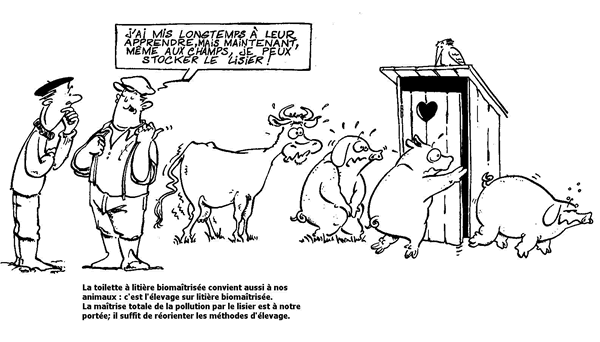 . Livestock raising in organic deep-litter housing systems is a proven technique that produces high-quality meat. By composting the litter-bedding over which livestock is raised, we now have the means of preventing water pollution caused by liquid pig manure. Should we not convince pig farmers of the soundness of this approach?
Christine ROUSSEAU, Toilette à litière biomaîtrisée: psychologie et motivation. (The biocontrolled litter toilet: psychology and motivation) Final thesis, Institution d'Enseignement de Promotion Sociale de la Commission Française de Peruwelz 1996.
The BLT operating principle
A purpose of the BLT is to restore our dejecta into the process of humus formation under the best possible conditions. For this, we must first prevent urease – an enzyme in our excreta – from transforming precious organic nitrogen (urea/carbamide) into ammonia, unusable for the synthesis of humus. This phenomenon was first understood thanks to laboratory observations [4]: that plant cellulose inhibits the enzymatic reactions that mineralize dejecta's organic matter. Now, these reactions constitute the origin of obnoxious smells. An idea became obvious: add plant cellulose to our dejecta to block enzymatic reactions, and in so doing, prevent odours. Another benefit of this gesture is to increase our dejecta's carbon/nitrogen ratio to a level that is ideal for exterior aerobic composting. [5]. An important detail: the inhibition of enzymatic reactions can only take place in a moist environment, therefore in the presence of urine. This is the reason you must absolutely not separate urine from faeces. Another important detail: the introduction of plant cellulose in the BLT's process (i.e. the litter) must occur immediately after defecation or urination, to prevent the start-up of mineralization.
To complete the picture of the situation, you may be interested in reading our article on the BLT and pharmaceutical residues in human dejecta.
Our dejecta's C/N ratio is about 7, whereas that of plants is between 200 and 300. At the start of composting, the C/N ratio should be between 40 and 60. Combining animal-sourced nitrogen (dejecta) and plant carbon (the litter) creates the ideal conditions for humus formation, without unpleasant odours.
What the BLT Looks Like
Once you have adopted a BLT, you don't need to try to imitate conventional flush toilets, unlike what most commercially-sold dry toilets do. It's no longer necessary. You can design a beautiful piece of furniture with a style
 that can match the rest of the home. You can apply the same principle to a BioLitter urinal.
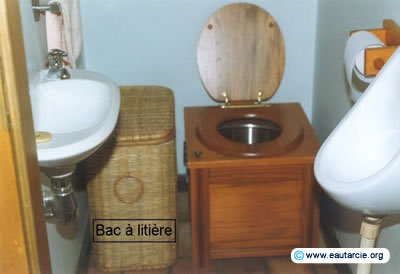
Technically, simplicity is of the essence. The BLT is a simple receptacle placed within a piece of furniture that can evoke a simple chair with a hole in the middle. Important detail: a protective baffle must be mounted under the cover, unless your litter receptacle rests up against the underside of the toilet seat. For added comfort, you can even add armrests and upholstering. You need not provide water supply (except for a lavatory), nor a drain, nor mechanical venting for the BLT. The BLT can be placed within the home, in either the toilet room or bathroom. For added convenience, some even put a BLT in the guest bedroom, behind a folding screen. It is also quite appropriate for a sickroom. Also, it is important to provide a litter container, either separate from the BLT or integrated in the BLT design.
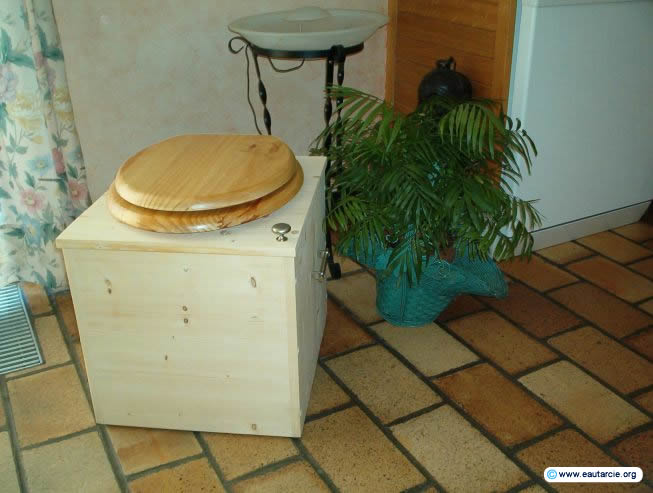
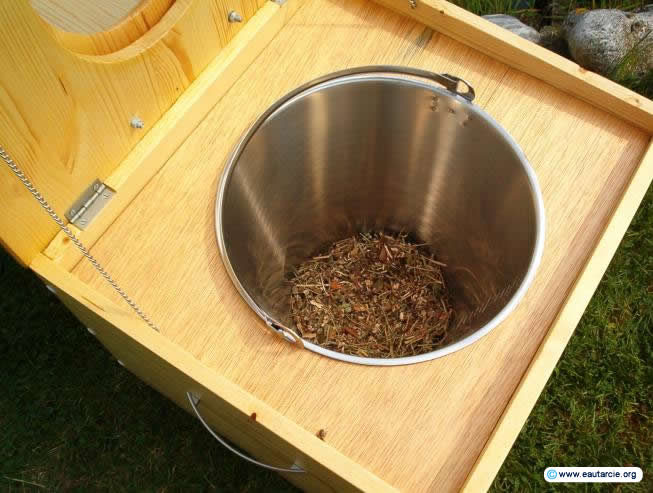
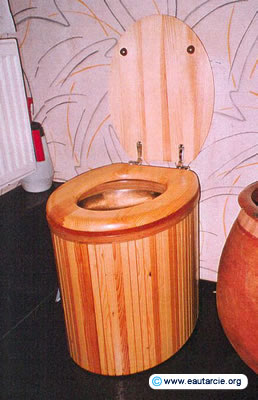
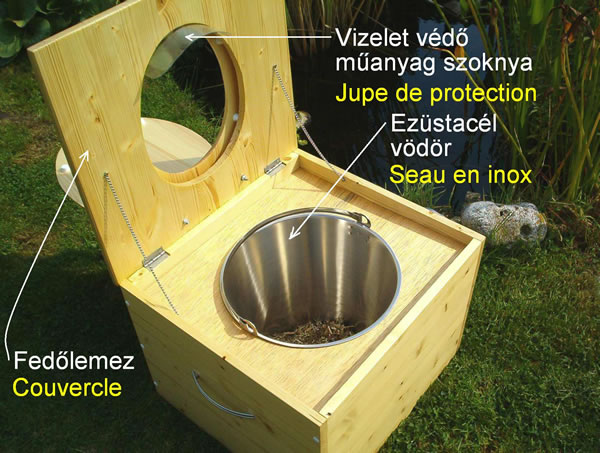
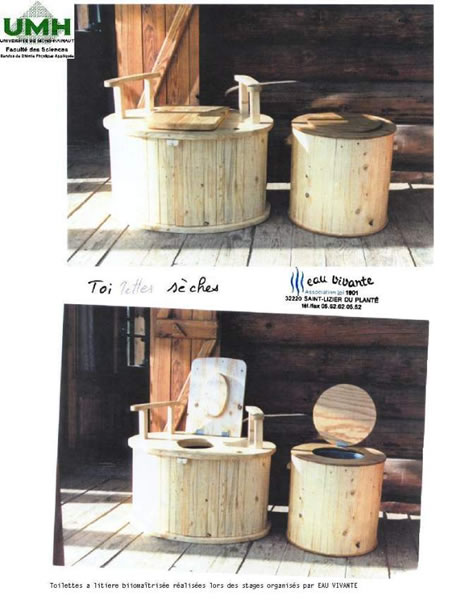
When used as recommended, the BLT does not generate more odours than a conventional flush toilet.
Finally, you can make your own litter, as long as you have a proper garden shredder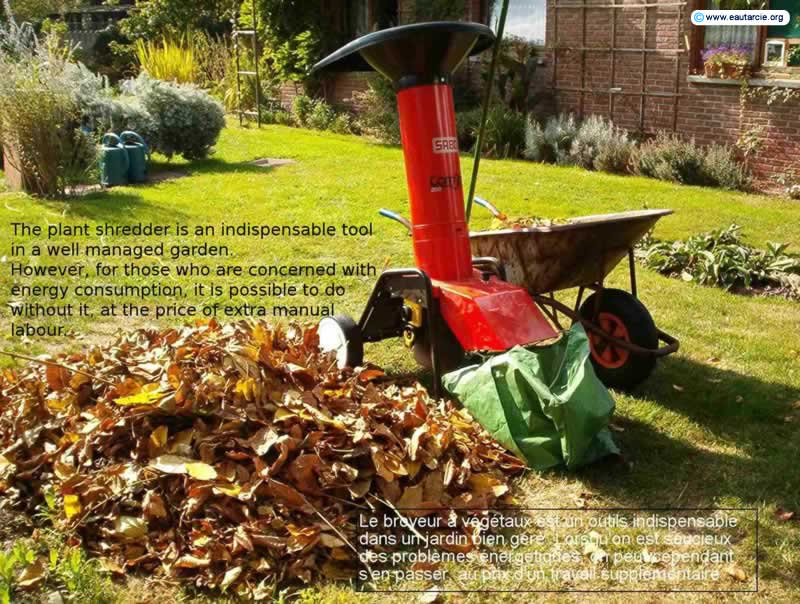 . Dead leaves
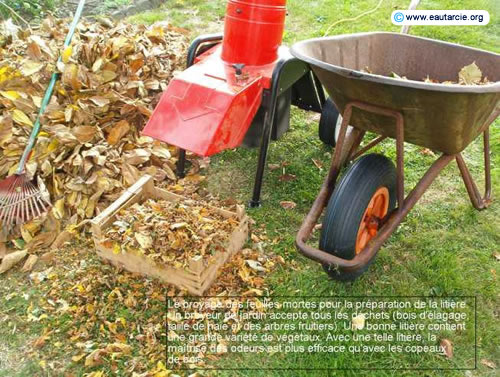 , wood trimmings, ligneous plant stems like sunflower, green pepper, lavender, etc., make an excellent toilet litter. Shredded cardboard
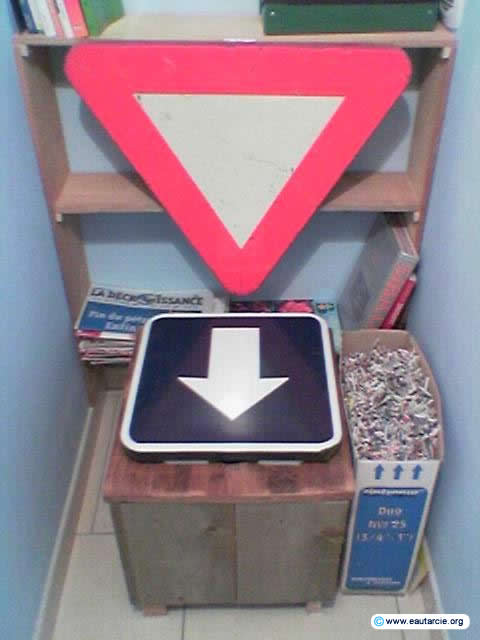 and dried grass clippings can also be used.
In all cases, it's better to store your litter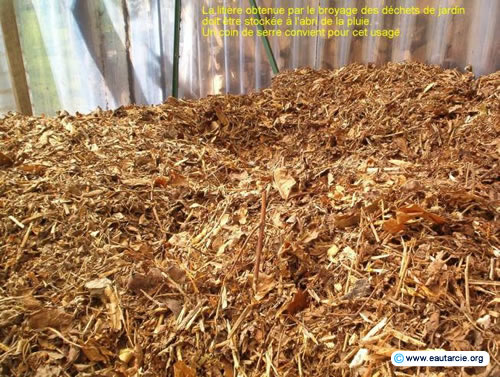 in a protected area, especially when you make it yourself. To see a litter storage bin, click here.
Plastic or Metal Receptacle
For a good BLT, we have always recommended a stainless steel bucket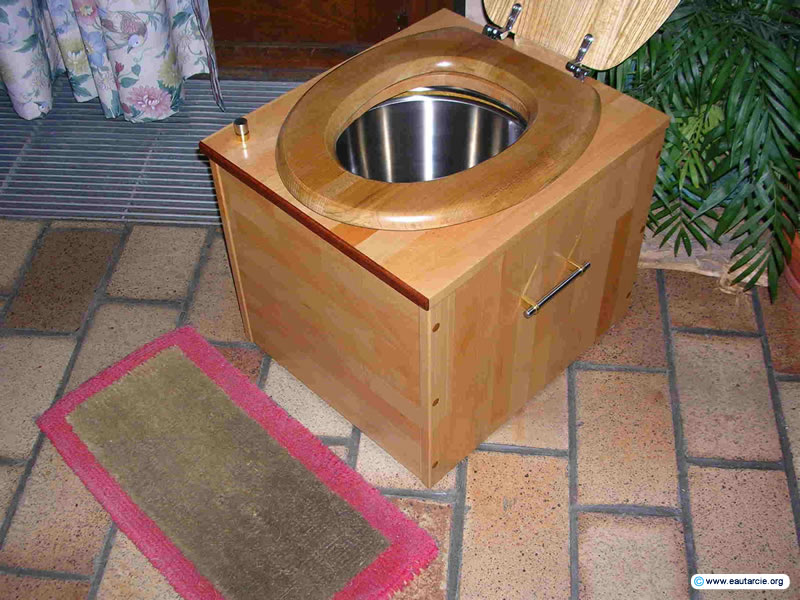 . It's a bit more expensive (between 60 and 100 € for a 15- to 18-litre capacity) but so much easier to clean and maintain.
An enamelled metal bucket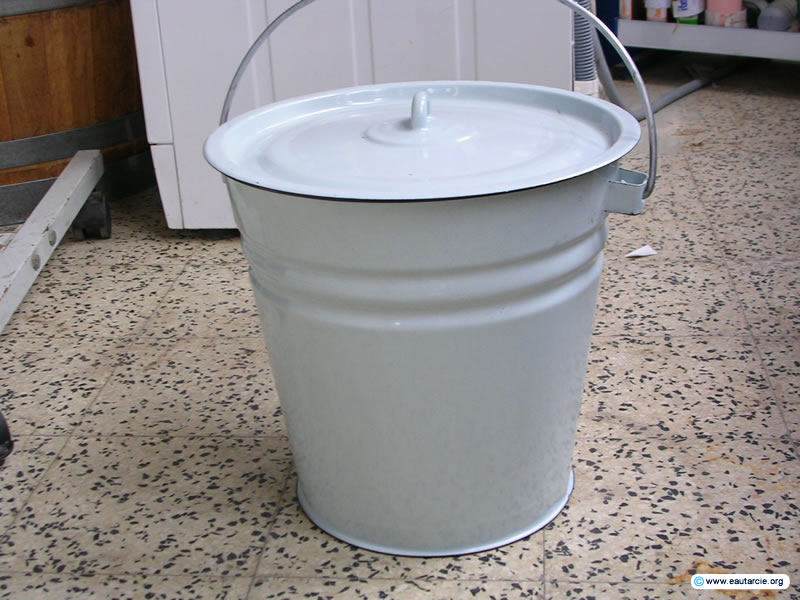 works well and costs much less than stainless steel. Cleaning and maintenance are also easy. However, these buckets may be hard to find and don't necessarily come in all sizes. In Belgium for example, I have only found 12 litre buckets, which require more frequent emptying. On the other hand, they are lighter to handle…
Galvanized steel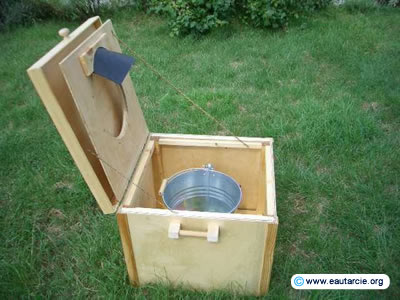 buckets are also convenient, but they always end up rusting. The bucket quickly becomes unusable.
Plastic buckets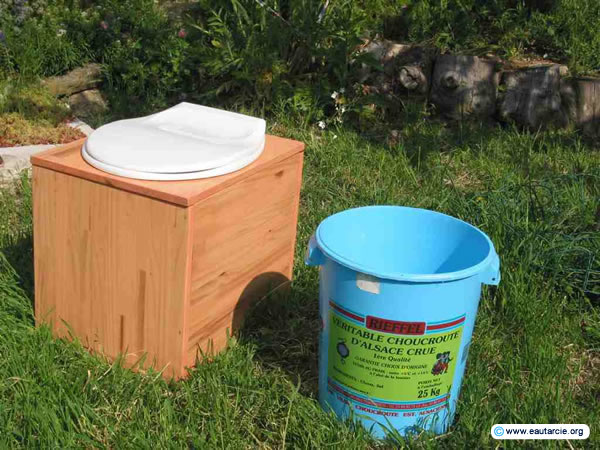 are quite inexpensive, but they can take up odours with long-term use. A BLT equipped with this bucket has a greater chance of smelling bad and requires more rigorous cleaning.
Important: A BLT Must Be Beautiful!
In most homes, entering a water closet constitutes a discontinuity in home decoration. You pass from rooms furnished with a certain style to enter an impersonal cubbyhole, confronted to a porcelain toilet that is totally unrelated in style to the rest of the home.
The BLT's design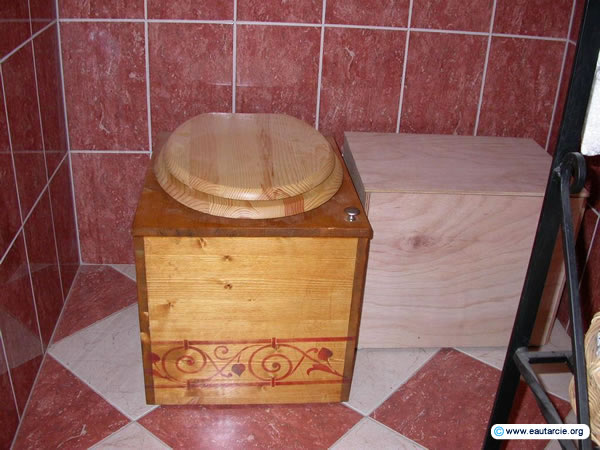 can and should be integrated to the furnishing or home decorating style
 . You need two pieces of furniture (the toilet and the litter container
 ) in similar style as your other furniture. In a tasteful décor, the BLT can become a woodwork masterpiece that can even be installed in a sickroom, behind a folding screen in a guest room, and so on. It provides a comfort that requires no major and costly transformations to install plumbing. All styles are adaptable to a BLT (baroque, gothic, colonial, modern, etc.). We have seen BLTs built in a local folk style
 . These can be richly decorated with paintings or carefully sculpted
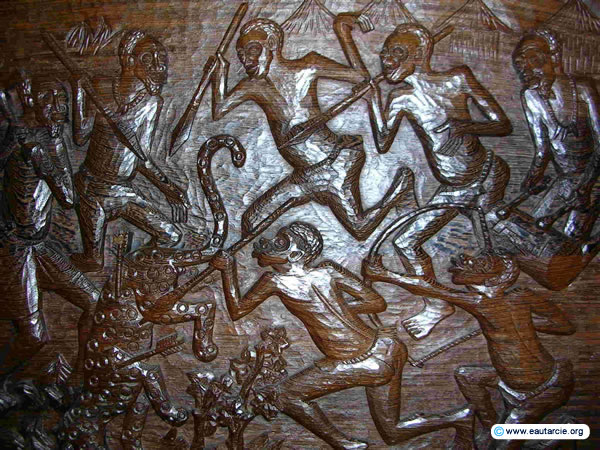 . An interesting option is a throne style sculpted and cushioned chair with armrests
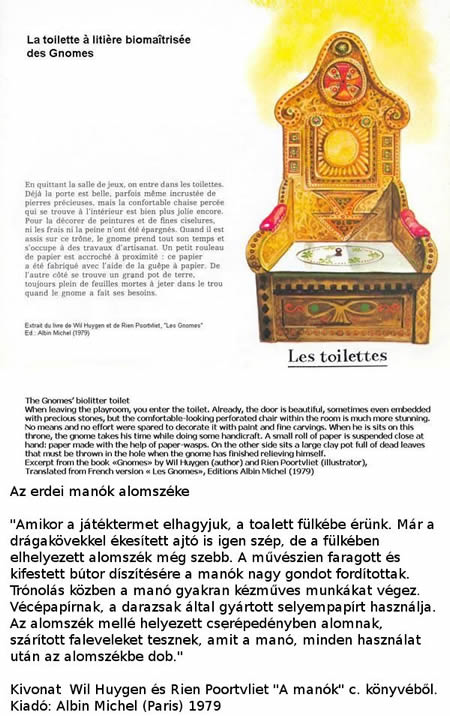 . When the BLT is placed in the bathroom
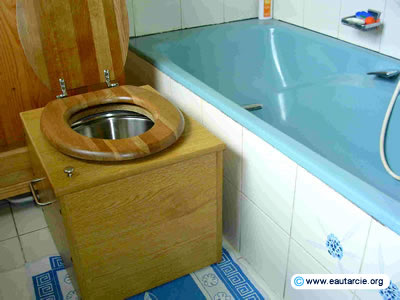 , its case can be tiled
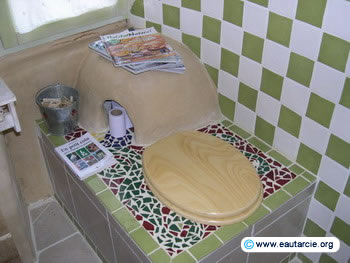 as the rest of the room, or not
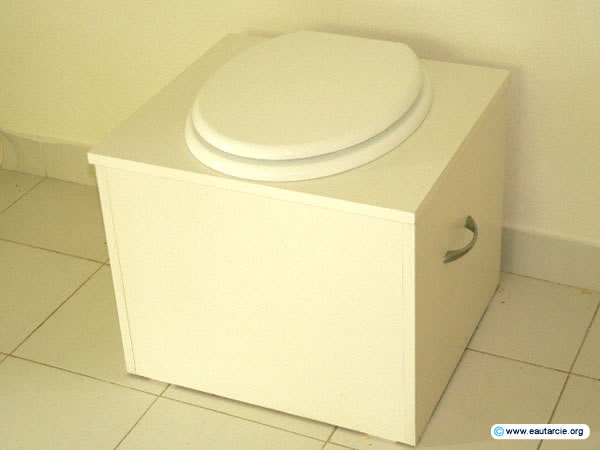 . See our photo document showing other examples of BLTs.
How to Build your BLT
The BLT does not benefit from any commercial advertising. The basic idea is that anyone and everyone should have access to a toilet that is truly environmentally friendly. It can obviously be built by your average handymen or « do-it-yourselfers » using the plans provided within this website. You may also want to look-up Joseph Jenkins' drawings and sketches in his book on sawdust toilets. Here is a finished example.
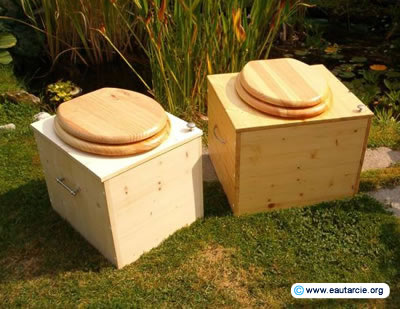
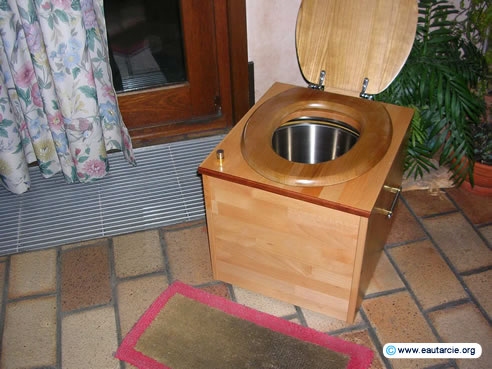
An elegant solution can also consist in setting a sanitary bucket in a chair seat: an inexpensive and efficient solution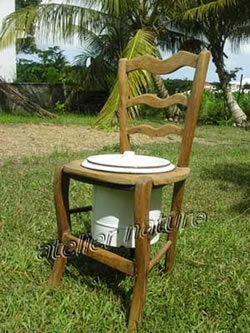 , and very presentable.

However, if you are not handy with tools, you can find BLTs already available on the market in some regions of the world. This is particularly true in France and Belgium, where the EAUTARCIE website has had considerable success. One can only hope that BLT manufacturers will sprout worldwide. Go to our webpage on BLTs on the market for further references.
BLTs for Collective Use
The BLT is perfectly adapted to grouped collective set-ups , as well as festivals
 and concerts. However, there are certain needed precautions to avoid eventual failure. Such set-ups require added supervision when compared to flush toilets (or chemical toilets). A person must be ever-present to ensure litter and toilet paper supply, but also to remove and replace the filled-up buckets in proper time. For this purpose, each toilet should be assigned 2 or 3 containers for temporary containment to provide extra time between actual waste removals. The waste can be dumped in a container that then needs to be transported to a proper composting facility. The collective set-up can even include BioLitter urinals.
To continue reading, go to The BLT Instruction Manual